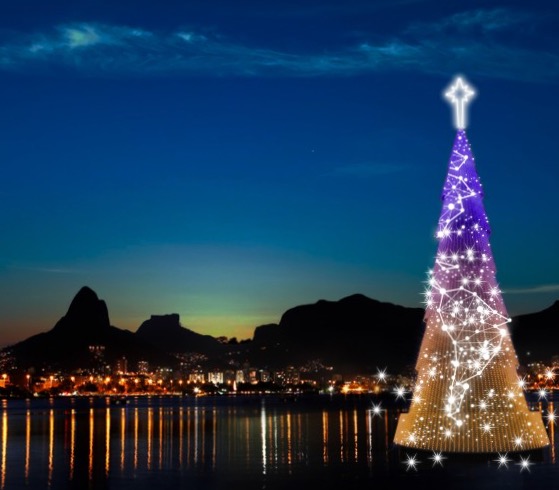
From New York to Sydney, London, Rio, Vienna… our travel designers will put Christmas stories from around the world under your Christmas tree.
This great Christian feast of the Nativity symbolises sharing and generosity in the heart of the home. In North America, as in many other cultures, on the evening of 24 December, people leave cookies, a glass of milk (or brandy for the more epicurean!) and carrots for the brave reindeer in front of the big illuminated tree. But this year, will Father Christmas be allowed his snack? The Irish custom is to leave him a glass of whisky before leaving for midnight mass, and to guide him, light a candle for him to see from the window.
Have you ever seen the Old Man with the white beard dressed in shorts and flip-flops? Yes, in Australia, next to the sledges on the white sand….. in front of a big surfing competition welcoming its participants, all dressed up as Father Christmas. On the other hand, don’t expect to be drinking mulled wine curled up in a big, thick coat – it’s around 35°C there, and you’ll be unwrapping your presents on the beach around a barbecue.
Sweet jelly, meat with mint sauce, pudding drizzled with cognac that you’ve been making for months or oysters with bacon could be your New Year’s Eve menu if you move to kangaroo country.
Scarlet red, toad green, sometimes electric blue,
Adorned with reindeer, fir trees or another snowman with a prominent carrot,
Ostentatious, I really don’t go unnoticed,
I come out of my wardrobe on the third Friday in December,
My everything makes me ridiculous.
I am……je suis……..?
The most kitsch Christmas jumper! The king of competitions all over the UK, from the streets of remote villages to the biggest works councils in London.
The vast majority of Brazilians are very religious and Christian, so Christmas is a major event there. As in many parts of Latin America, there is a long-standing Advent tradition: ‘L’Amigo Secreto’, which is celebrated with family and friends. During a festive evening of Baclau (codfish), prawn soup and prato tipico de natal, each guest carries a gift of a minimum budget. All the names of the participants are collected in a basket and drawn at random. As you fish out your little piece of paper, you find out who your ‘secret friend’ will be, and you don’t have to tell anyone. The game starts like this: the first person drawn at random has to get the others to guess who it is, using clues. The winner receives the gift and then the friends are unmasked in turn, in the joy and good humour of the anecdotes linked to this little game.
In Sweden, the festivities begin on Saint Lucia’s Day, 13 December. Homes are decorated with candleholders and star-shaped lights. Surrounded by choirs singing traditional songs, the star crosses the city streets covered in a crown of candles. Lussekatter’, saffron buns, are available everywhere. Celebrated in Scandinavia and southern Europe, Saint Lucia of Syracuse lived in Sicily in the 200s. She became very popular in Italy thanks to her devotion to the poor and the sick. On Christmas Day, it is traditional for poems – in verse and rhyme – to be attached to presents. It’s best to have a good imagination…
Christmas in Venezuela is one of the most colourful in Latin America and the whole world! Fireworks are very popular. In Caracas, the capital, it’s traditional to rollerblade to mass between 16 and 24 December. Roads are often closed to traffic from 8 o’clock in the morning to allow people to skate peacefully. According to legend, children go to bed with a piece of string tied around their toe and the other end swinging out of the window. When the skaters pass by, they pull on the string and the children know it’s time to put on their skates.
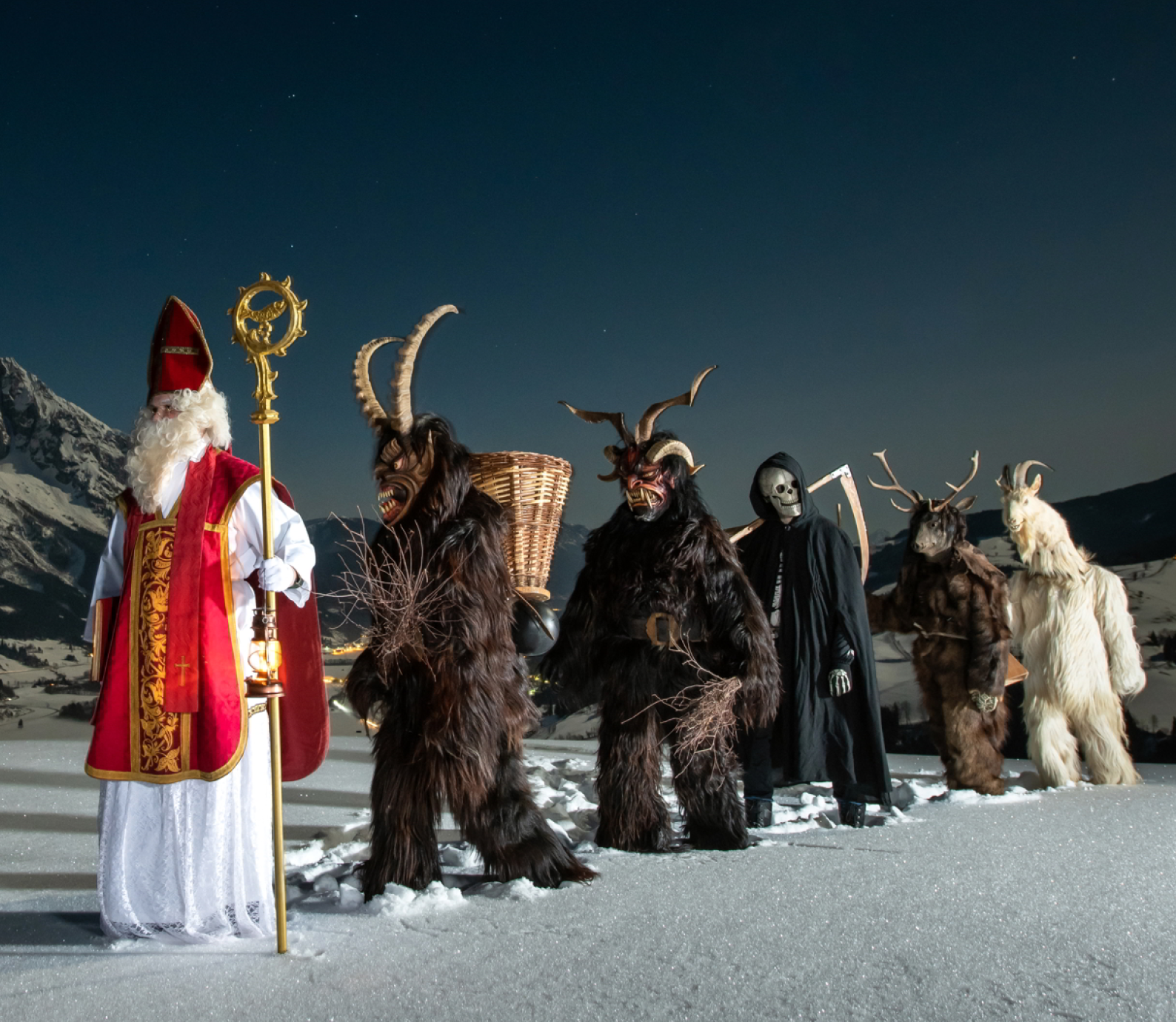
And last but not least….. In Central Europe, Saint Nicholas is traditionally accompanied by a Machiavellian partner – our bogeyman, as it were. While one rewards good children, the other punishes those who have been naughty. In Southern Germany and Austria, the mythical half-goat, half-demon creature is called Krampus. There’s even a show dedicated to him, and he’s now a UNESCO World Heritage Site. This gives young Austrian men the opportunity to dress up as Krampus during the first two weeks of December.